
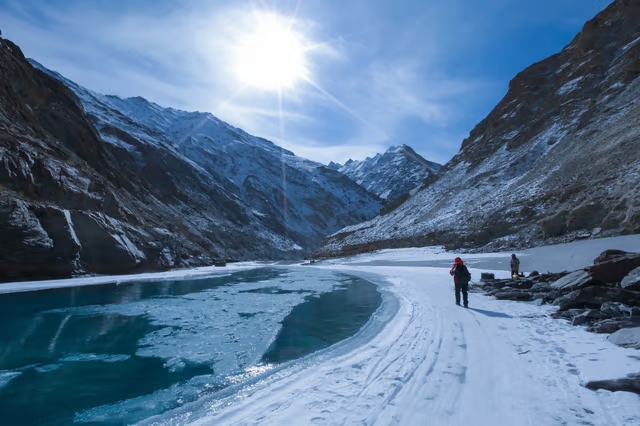
Chadar Trek
- Tour Type:Trek
- Duration:9 Days
- Max Altitude:11400 ft
- Difficulty:Difficult
- Pickup Point:Leh
- Best Time:Jan to Feb
- Trek Distance:62 km
Chadar Trek, an exceptional winter trek, unfolds the beauty of the frozen Zanskar River in Ladakh. Known for its breathtaking landscapes and challenging conditions, Chadar Trek offers a once-in-a-lifetime experience for adventure enthusiasts.
Nestled in the heart of the Himalayas, Chadar Trek is not just a journey but a captivating adventure through ice, snow, and the stark beauty of a frozen world. This trek, traditionally used by locals to access the Zanskar Valley during winter, has become a popular destination for trekkers seeking a unique and thrilling experience.
The trek spans approximately 105 kilometres, with the route crossing the frozen river, climbing icy rocks, and navigating through narrow gorges. The average altitude ranges around 11,000 feet, with the highest point being about 11,800 feet. Despite the cold temperatures, which can drop to as low as -30°C, the pristine beauty of the icy landscape, the serenity of the frozen river, and the warm hospitality of the local people make this trek a must-do for adventure seekers.
Embarking on the Chadar Trek requires proper preparation, physical fitness, and mental determination, but the rewards are unparalleled. Whether you're an experienced trekker or a thrill-seeker looking for a new challenge, Chadar Trek promises an unforgettable journey.
Embarking on the Pin Bhaba Pass Trek between May and September offers the most favorable weather conditions, enhancing the trekking experience in the Himalayas. The period from May to June is particularly magical, as the melting snow gives way to lush greenery and vibrant wildflowers. Daytime temperatures hover between 15°C and 20°C, creating perfect conditions for exploring the breathtaking landscapes of the Pin Bhaba Pass route.
The monsoon season begins in July and August, bringing rain showers and misty conditions that can add a mystical allure to the trek. Trekkers must be well-prepared with appropriate rain gear to navigate the wetter trails comfortably.
September signals the end of the monsoon and brings clearer skies and stable weather, making it an ideal time for those looking to avoid the rains yet still enjoy the lush post-monsoon scenery.
Shimla is the starting point for many trekkers embarking on the Pin Bhaba Pass Trek. Depending on your location, here are several ways to reach Shimla:
By Air: Shimla Airport (Jubbarhatti Airport) offers limited connectivity with domestic flights from Delhi and Chandigarh. After landing, a taxi or bus will take you to the city centre.
By Train: Kalka Railway Station, around 90 kilometres away, is your gateway to Shimla. From there, take the scenic Kalka-Shimla Toy Train, a journey that itself is a UNESCO World Heritage Site.
By Bus: Regular services by Himachal Pradesh State Road Transport Corporation (HRTC) and private operators connect Shimla to major North Indian cities like Delhi, Chandigarh, and Manali.
The Pin Bhaba Pass Trek is a moderate to challenging adventure due to its diverse and demanding terrain. Here's what trekkers should expect:
Terrain and Challenge: The trek involves varied terrains, including forests, meadows, and river crossings, with significant altitude gains that require a good fitness level.
Altitude Considerations: Acclimatization is crucial to enjoying the trek safely when reaching heights like the Pin Bhaba Pass, which is over 16,215 feet (4,877 meters).
Trek Duration: Typically lasting 8-10 days, the Pin Bhaba Pass Trek itinerary demands endurance, making physical preparation essential.
Weather Conditions: Prepare for abrupt weather shifts, which are common in the Himalayas. Adequate gear is essential to handle potential cold and wet conditions, especially during the monsoon and post-monsoon periods.
Preparation and Fitness: A high level of physical fitness and prior trekking experience enhance your ability to tackle the Pin Bhaba Pass Trek difficulty level. Engaging in cardio and strength training before the trek can be highly beneficial.
Guided Trek Options: For those less experienced, opting for a guided Pin Bhaba Pass Trek package can provide valuable support and safety. These packages often include detailed Pin Bhaba Pass Trek information, from Pin Bhaba Pass Trek booking to logistical planning.
Remote Accessibility: Some parts of the trek traverse remote areas, emphasizing the need for self-sufficiency and readiness for emergencies.
By choosing the right time and preparing adequately, trekkers can enjoy the majestic beauty and challenging terrain of the Pin Bhaba Pass Trek. Ensure you are well-equipped and consider a guided trek to make the most of this incredible Himalayan adventure.
Preparation is essential for a pleasant and effective Pin Bhaba Pass Trek trek. Here's how you can prepare:
Physical Fitness: Begin a fitness regime months in advance to improve stamina and strength. Focus on cardiovascular and strength training exercises.
Acclimatization: Spend a day or two in Shimla or a similar altitude to adjust to higher elevations.
Nutrition and Hydration: Drink more water and carry wholesome snacks to help you stay hydrated and full throughout the hike.
Training Hikes: Use training hikes to familiarize yourself with similar terrains and altitudes.
Safety Equipment: Ensure you have all necessary safety gear, including a headlamp, trekking poles, and a comprehensive first aid kit.
The Pin Bhaba Pass Trek traverses challenging terrains and remote areas, prioritizing safety. Here are some essential safety tips:
Weather Preparedness: Monitor the weather conditions closely, as the Himalayan weather can be unpredictable.
Guide and Group: Trek with an experienced guide and group. Pin Bhaba Pass Trek bookings through a reputed trekking agency can offer additional safety.
Emergency plan: Prepare a detailed emergency plan that includes evacuation routes and the phone numbers of nearby emergency services.
Avalanche Safety: If trekking during snow-prone months, be aware of avalanche risks and safety protocols.
Environmental Responsibility: Follow the Leave No Trace philosophy to reduce ecological impact.
By incorporating these preparation and safety guidelines, trekkers can ensure a memorable and secure journey on the Pin Bhaba Pass Trek. With proper planning and awareness, this trek provides a fantastic chance to see the Himalayas' incredible landscapes and rugged beauty.
Nestled in the heart of the Himalayas, Chadar Trek is not just a journey but a captivating adventure through ice, snow, and the stark beauty of a frozen world. This trek, traditionally used by locals to access the Zanskar Valley during winter, has become a popular destination for trekkers seeking a unique and thrilling experience.
The trek spans approximately 105 kilometres, with the route crossing the frozen river, climbing icy rocks, and navigating through narrow gorges. The average altitude ranges around 11,000 feet, with the highest point being about 11,800 feet. Despite the cold temperatures, which can drop to as low as -30°C, the pristine beauty of the icy landscape, the serenity of the frozen river, and the warm hospitality of the local people make this trek a must-do for adventure seekers.
Embarking on the Chadar Trek requires proper preparation, physical fitness, and mental determination, but the rewards are unparalleled. Whether you're an experienced trekker or a thrill-seeker looking for a new challenge, Chadar Trek promises an unforgettable journey.
Why Choose Chadar Trek
Embarking on the Pin Bhaba Pass Trek between May and September offers the most favorable weather conditions, enhancing the trekking experience in the Himalayas. The period from May to June is particularly magical, as the melting snow gives way to lush greenery and vibrant wildflowers. Daytime temperatures hover between 15°C and 20°C, creating perfect conditions for exploring the breathtaking landscapes of the Pin Bhaba Pass route.
- Challenging Conditions: The Chadar Trek is renowned as one of the most challenging treks in India due to the extreme cold, icy terrain, and unpredictable weather conditions. It presents trekkers with an actual test of their physical and mental endurance.
- Unique Adventure: Trekkers experience walking on a frozen river, crossing frozen waterfalls, and navigating through breathtakingly beautiful but harsh landscapes. The trek pushes individuals out of their comfort zones, fostering personal growth and resilience.
The monsoon season begins in July and August, bringing rain showers and misty conditions that can add a mystical allure to the trek. Trekkers must be well-prepared with appropriate rain gear to navigate the wetter trails comfortably.
September signals the end of the monsoon and brings clearer skies and stable weather, making it an ideal time for those looking to avoid the rains yet still enjoy the lush post-monsoon scenery.
Why Choose Chadar Trek
Shimla is the starting point for many trekkers embarking on the Pin Bhaba Pass Trek. Depending on your location, here are several ways to reach Shimla:
By Air: Shimla Airport (Jubbarhatti Airport) offers limited connectivity with domestic flights from Delhi and Chandigarh. After landing, a taxi or bus will take you to the city centre.
By Train: Kalka Railway Station, around 90 kilometres away, is your gateway to Shimla. From there, take the scenic Kalka-Shimla Toy Train, a journey that itself is a UNESCO World Heritage Site.
By Bus: Regular services by Himachal Pradesh State Road Transport Corporation (HRTC) and private operators connect Shimla to major North Indian cities like Delhi, Chandigarh, and Manali.
Understanding the Difficulty Level of the Pin Bhaba Pass Trek
The Pin Bhaba Pass Trek is a moderate to challenging adventure due to its diverse and demanding terrain. Here's what trekkers should expect:
Terrain and Challenge: The trek involves varied terrains, including forests, meadows, and river crossings, with significant altitude gains that require a good fitness level.
Altitude Considerations: Acclimatization is crucial to enjoying the trek safely when reaching heights like the Pin Bhaba Pass, which is over 16,215 feet (4,877 meters).
Trek Duration: Typically lasting 8-10 days, the Pin Bhaba Pass Trek itinerary demands endurance, making physical preparation essential.
Weather Conditions: Prepare for abrupt weather shifts, which are common in the Himalayas. Adequate gear is essential to handle potential cold and wet conditions, especially during the monsoon and post-monsoon periods.
Preparation and Fitness: A high level of physical fitness and prior trekking experience enhance your ability to tackle the Pin Bhaba Pass Trek difficulty level. Engaging in cardio and strength training before the trek can be highly beneficial.
Guided Trek Options: For those less experienced, opting for a guided Pin Bhaba Pass Trek package can provide valuable support and safety. These packages often include detailed Pin Bhaba Pass Trek information, from Pin Bhaba Pass Trek booking to logistical planning.
Remote Accessibility: Some parts of the trek traverse remote areas, emphasizing the need for self-sufficiency and readiness for emergencies.
By choosing the right time and preparing adequately, trekkers can enjoy the majestic beauty and challenging terrain of the Pin Bhaba Pass Trek. Ensure you are well-equipped and consider a guided trek to make the most of this incredible Himalayan adventure.
How to Prepare for Pin Bhaba Pass Trek
Preparation is essential for a pleasant and effective Pin Bhaba Pass Trek trek. Here's how you can prepare:
Physical Fitness: Begin a fitness regime months in advance to improve stamina and strength. Focus on cardiovascular and strength training exercises.
Acclimatization: Spend a day or two in Shimla or a similar altitude to adjust to higher elevations.
Nutrition and Hydration: Drink more water and carry wholesome snacks to help you stay hydrated and full throughout the hike.
Training Hikes: Use training hikes to familiarize yourself with similar terrains and altitudes.
Safety Equipment: Ensure you have all necessary safety gear, including a headlamp, trekking poles, and a comprehensive first aid kit.
Safety Considerations for Pin Bhaba Pass Trek
The Pin Bhaba Pass Trek traverses challenging terrains and remote areas, prioritizing safety. Here are some essential safety tips:
Weather Preparedness: Monitor the weather conditions closely, as the Himalayan weather can be unpredictable.
Guide and Group: Trek with an experienced guide and group. Pin Bhaba Pass Trek bookings through a reputed trekking agency can offer additional safety.
Emergency plan: Prepare a detailed emergency plan that includes evacuation routes and the phone numbers of nearby emergency services.
Avalanche Safety: If trekking during snow-prone months, be aware of avalanche risks and safety protocols.
Environmental Responsibility: Follow the Leave No Trace philosophy to reduce ecological impact.
By incorporating these preparation and safety guidelines, trekkers can ensure a memorable and secure journey on the Pin Bhaba Pass Trek. With proper planning and awareness, this trek provides a fantastic chance to see the Himalayas' incredible landscapes and rugged beauty.
Itinerary
Expand allDay 1 Shimla to Kafnu
Begin your trekking adventure in Shimla, which is accessible by road or rail from anywhere globally. The journey to Kafnu spans approximately 200 kilometers and takes 6 to 7 hours. During the drive, enjoy the serene landscapes and a brief stop at Kafnu's remarkable underground hydroelectric project. Upon arrival, settle into your hotel, enjoy a delightful dinner with soothing music, and rest for the trek ahead.
Altitude
8,000 ft
Total Drive
150 km
Day 2 Janglikh to Dayara Thach
Take a leisurely morning to explore the charming heritage village of Janglik.After breakfast, embark on a moderate trek (5-6 hours) towards Dayara Thach.The trail winds through dense forests, meadows, and grassy slopes.Reach the stunning Dayara Thach meadows (11,100 ft) for dinner and an overnight stay.
Altitude
11,100 ft
Trek
11 km
Day 3 Dayara Thach to Litham Thach
Start the day exploring the vast expanses of Dayara meadows.The trek (3-4 hours) offers beautiful scenery, including thick forests, cascading streams, and meadows.Gain 650 ft in elevation as you approach Litham campsite.Cross the Chandranahan stream and witness the first glimpse of Litham (11,800 ft), nestled amidst snow-clad Dhauladhar peaks and silver birch forests.Relax at the picturesque campsite, which offers three-sided views of Litham, and Chandranahan waterfalls on the left, and Chandranahan Lake is framed by snow-capped mountains.
Altitude
11,800 ft
Trek
9 km
Day 4 Litham Thach To Dhunda Via Chandranahan Lake
Trek from the beautiful meadows of Litham Thach to Dhunda, visiting the sacred Chandranahan Lake along the way. The trail offers stunning views of snow-covered peaks and alpine landscapes as you gradually gain altitude. Dhunda serves as the final campsite before the Buran Pass crossing.
Altitude
13,400 ft
Trek
8 Km
Day 5 Dhunda to Munirang via Buran Ghati Pass
This is the most adventurous day of the trek as you cross the high-altitude Buran Pass. After reaching the pass, trekkers descend through snow slopes into the beautiful valley leading to Munirang campsite. The trail offers spectacular views of the surrounding Himalayan peaks and dramatic landscapes.
Altitude
15,000 ft
Trek
9 Km
Day 6 Munirang to Brua Village Than Back To Shimla
Experience a diverse descent with gushing streams and mesmerizing apple orchards.Arrive at Barua village (6,700 ft) and interact with the welcoming locals. Follow the trail to Karcham or take a vehicle to Sangla or Reckong Peo for a smoother connection back to Shimla. Expected arrival in Shimla by 9-10 PM.
Altitude
6,700 ft
Trek
9 Km
Total Drive
200 Km
Includes and Excludes
- Free customized printed travel card worth Rs.500, delivery to home address post trek completion.
- Transportation from Rishikesh to Rishikesh by Non-AC Vechile on sharing basis
- Accommodation on Triple Sharing in Alpine/Dome Camps and Stay at Lohajung.
- Meals Include from Day 1 Dinner to Last Day Breakfast. It Will Be Mostly Vegetarian (Including Bed Tea, Breakfast, Lunch, Evening Tea, Dinner).
- Crampons and Gaitors for Snow Trekking.
- Certified and Experienced Trek Leader.
- Forest Permit & GST.
- Anything which is not inclusive is mentioned in the above category.
- Expenses of a personal nature such as tips, telephone calls, laundry, wines & alcoholic beverages.
- Personal trekking gear (pole,g shoes, cape, gloves, warm cap, bag, jacket etc).
- Personal luggage transportation by mules/porters.
- Towel, soap, and bottled water are not included in the package.
- If the weather becomes bad or you start feeling unwell during the trip, rescue or emergency help will be arranged for your safety. However, please note that all the expenses or charges for such rescue or medical assistance will have to be paid by you.
Packing List
- Back Pack (65L to 75L)
- Warm clothes (5–6 layers)
- 5–6 pairs of socks
- One pair of gloves
- 1 Warm Jacket
- 1 Pair Warm Cap
- Hiking Shoes
- Raincoat or Poncho
- Toilet Papers
- Water Bottle (thermal water for the snow trek)
- Snacks like dry fruits, energy bars, candies, etc.
- Power bank or charger
- Sunscreen, lip guard, or moisturizer
- Torch
- One valid ID proof
- Tiffin Box
Frequently Asked Questions
Are there guided tours available for the Pin Bhaba Pass Trek?
Yes, there are numerous guided tour options available. Booking a Pin Bhaba Pass Trek package with a reputable trekking company can provide added safety, logistical support, and an enriching trekking experience.
What are the safety considerations for the Pin Bhaba Pass Trek?
Preparations should include acclimatization to high altitudes, carrying the right gear, staying hydrated, and being aware of the weather conditions. Trekking should be done in a group or with an expert guide.
What should I pack for the Pin Bhaba Pass Trek?
Essential items include a sturdy backpack, warm layers, waterproof clothing, trekking boots, a water bottle, snacks, a first aid kit, and sun protection. Don't forget to carry a Pin Bhaba Pass Trek map for navigation.
What is the altitude of the Pin Bhaba Pass?
The Pin Bhaba Pass altitude peaks at over 16,215 feet (4,572 meters), offering challenging yet rewarding high-altitude trekking experiences.
Can I do the Pin Bhaba Pass Trek solo?
While solo trekking is possible, it comes with increased risks. It can be done if you are experienced and well-prepared, but joining a guided group is generally safer and recommended for most trekkers.
What are the primary attractions of the Pin Bhaba Pass Trek?
This trek offers stunning views of snow-capped mountains, lush green meadows, and the unique experience of transitioning between the arid Spiti Valley and the lush Bhabha Valley, making it a genuinely diverse Himalayan trek.
How long does the Pin Bhaba Pass Trek take?
Depending on your chosen route and pace, the hike usually lasts 8-10 days.
What is the best time to undertake the Pin Bhaba Pass Trek?
The ideal months are May to September, with stable weather conditions and scenic beauty due to post-monsoon greenery and pre-monsoon clarity.
How difficult is the Pin Bhaba Pass Trek?
The difficulty level ranges from moderate to challenging. Due to its steep ascents and descents, high altitude, and varied terrain, it requires good physical fitness.
How do I reach the Pin Bhaba Pass Trek's starting point?
The nearest major access points are Shimla and Kalka. You can reach Shimla by air, train, or bus, with further connections to the trek's starting point via local transport.
Chadar Trek
from₹25,000.00 /person
Have a question before booking? Message us to learn more.
You might also like...
No related trips found.